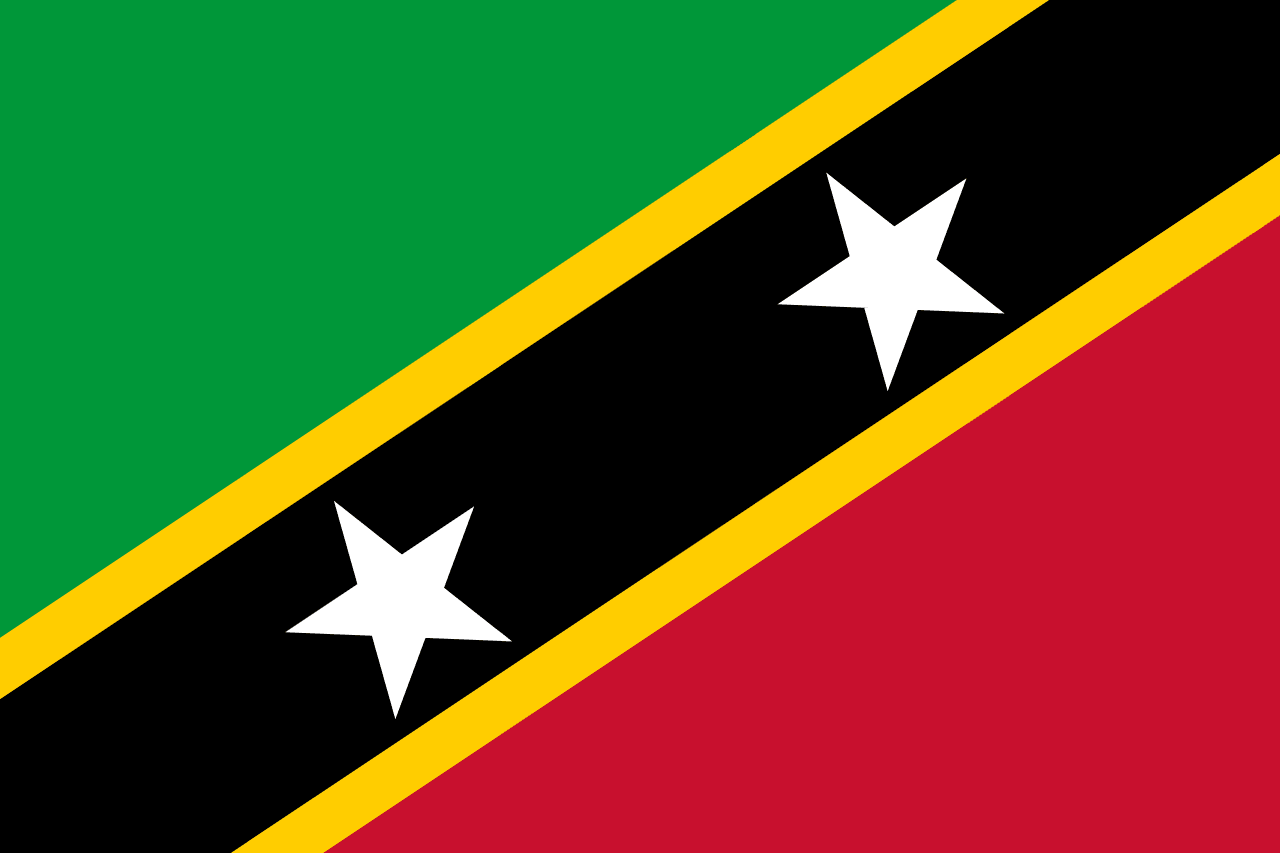
St. Kitts & Nevis
St. Kitts & Nevis runs the world's longest-established citizenship by investment programme — operating since 1984. Twin-island Caribbean federation, English-speaking, no taxation on worldwide income, and a passport that visa-free travels to 157 countries including the UK, EU Schengen, Singapore and Hong Kong.
St. Kitts and Nevis operates the longest-established citizenship by investment programme in the world, launched in 1984, and it remains a benchmark for the industry. For internationally mobile individuals and families, it offers a route to a second passport of a stable Caribbean nation through a qualifying contribution or investment, with no residence or language requirement.
The programme grants full citizenship, which can be passed to future generations, and provides visa-free or visa-on-arrival access to a substantial number of destinations. As a Commonwealth nation with no personal income tax, St. Kitts and Nevis appeals to those seeking mobility, succession planning and a measure of personal flexibility.
We present this route soberly. Caribbean citizenship by investment has come under increased international scrutiny, and the federation has reformed its programme to strengthen due diligence and pricing. We treat thorough vetting as a feature, not an obstacle.
Who it suits
This route suits individuals and families who want a reputable second citizenship without relocating, and who can satisfy rigorous source-of-funds checks.
It is particularly relevant for:
- frequent travellers seeking broader visa-free access
- families wanting a citizenship that can extend to spouses, children and certain dependants
- those undertaking long-term succession and mobility planning
It is less suitable for anyone seeking the lowest possible price above all, or unable to evidence the lawful origin of their funds, since the programme rightly prioritises integrity over volume.
Cost and what is really involved
Citizenship is obtained through one of the approved options, principally a non-refundable contribution to a government fund or an approved real estate investment, alongside government, due diligence and professional fees.
Typical components include:
- a qualifying government contribution or an approved real estate purchase
- due diligence and processing fees for each applicant
- professional, legal and document costs
Amounts depend on family size and the option chosen, and the federation has set minimum thresholds that have been revised in recent years. As at 2026 we confirm current figures before any client commits, and we never quote a fixed cost without checking the prevailing rules.
The process and timeline
The process runs through a licensed agent: due diligence, document preparation, application submission, government vetting, approval in principle, the qualifying payment or investment, and finally issuance of citizenship and passport. The federation has at times offered accelerated processing for an additional fee.
Timelines depend on the completeness of the file and the depth of vetting. As at 2026 we plan for a process measured in months and resist any temptation to cut corners on documentation.
Tax and lifestyle
St. Kitts and Nevis imposes no personal income tax, and citizenship does not require you to live there. However, your tax position continues to depend on where you are actually resident; a second passport does not, by itself, change your home-country tax obligations.
We are explicit on this point. Citizenship is a mobility and planning tool, not a tax solution in isolation, and we coordinate with tax advisers where relevant.
Pitfalls and how we avoid them
The principal pitfalls are:
- Due diligence failure. Inadequate source-of-funds evidence is the leading cause of rejection. We prepare this meticulously before filing.
- Misreading the cost. Headline figures omit fees and family loadings. We build a complete, current cost picture.
- Reputational drift. Programme rules and external scrutiny evolve. We monitor changes and advise on reputable structuring.
We will decline a case where the source of funds cannot be properly evidenced, because a refused application helps no one.
How HPT helps
We act through licensed channels, conduct a candid preliminary assessment, and assemble a thorough, well-documented application with particular care for source-of-funds. We confirm current costs and rules before commitment and manage the file through vetting to passport.
Throughout, we keep claims accurate and conservative, set realistic timelines, and align the citizenship with your wider residence, tax and succession planning.
Because the federation has reformed its programme more than once, we also keep clients informed of how rule and pricing changes may affect a planned application, and we time submissions sensibly around them. Our objective is a citizenship that holds its value and stands up to scrutiny, secured through a process you understand at every step.
What this passport gives you.
Routes into the programme.
Government-set minimums shown. HPT advisory fees are separate and fixed in your engagement letter.
Who qualifies.
- Aged 18 or over (separate processes for dependents)
- Clean criminal record with no pending matters
- Documented source of investment funds
- Pass Tier-1 due diligence (independent international firm)
- Sworn statement of health and good character
From engagement to passport.
- 01 · EngagementEngagement letter signed, retainer paid, full file opened.
- 02 · Due diligence preparationWe assemble documents, source-of-funds memorandum and personal declarations.
- 03 · Government submissionApplication filed via licensed agent; government due diligence runs ~90 days.
- 04 · Approval in principleInvestment funds released to escrow or government.
- 05 · Oath & passportOath of allegiance, registration, passport issued and delivered.
St. Kitts & Nevis CBI — practical questions.
Other Caribbean CBI programmes.
Is St. Kitts & Nevis the right programme?
A 90-minute working session with a director, modelled against your tax and mobility goals.